
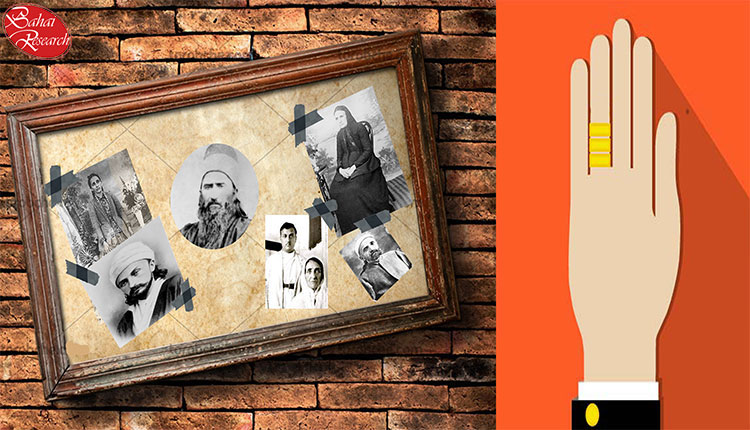
Polygamy in the Baha’i Faith: Teachings vs. Leadership

1,286

Introduction

In the Bahá’í Faith, teachings on the equality of men and women have been emphasized by Bahá’í leaders. Accordingly, Bahá’ís claim that special attention has been given to women’s rights in Bahá’í society. For example, the issue of polygamy has reportedly been regulated through the laws set by Bahá’í leaders. Based on these laws, polygamy in the Baha’i Faith is declared forbidden in the Bahá’í Faith, and Bahá’í leaders not only emphasized monogamy but are also said to have followed this command themselves, including Mírzá Ḥusayn-‘Alí (Bahá’u’lláh), the leader of the Bahá’í Faith.

To verify this claim, one can refer to Bahá’í texts and sources and examine the life of Bahá’u’lláh, the founder of the Bahá’í Faith, as well as the stance of subsequent Bahá’í leaders concerning the issue of polygamy.


The Untold Secrets of Bahá’u’lláh’s Marriages

Most books and sources related to the Bahá’í Faith contain information about the children and genealogy of Mírzá Ḥusayn-‘Alí Núrí. However, Fāżil Māzandarānī, in his book Leaders and Followers (Persian version), refers to the multiple marriages of the Bahá’í leader.

Throughout his life, Bahá’u’lláh had three wives and one concubine:

  1. Asiyih, known as Umm al-Kā’ināt, whom he married at age 18 in 1251 AH (1835 CE). At that time, it is expected that Mírzá Ḥusayn-‘Alí was still a Muslim.
  2. Fatimah, his second wife, whom he married in 1261 AH (1845 CE). This date is one year after Mírzá ‘Alí-Muḥammad the Báb proclaimed his mission to Mullá Ḥusayn Bushrú’í. Although Bahá’u’lláh never met the Báb, according to Bahá’í claims, he was considered a Bábí by then.
  3. Gohar, whom Bahá’u’lláh married as his third wife in 1265 AH (1849 CE). At this time, he had not yet made his claim of being “He whom God shall make manifest” in the Garden of Najib Pasha, but he was known as a fallower of Babi Faith.
  4. Jamāliyya, a 13-year-old concubine whom Bahá’u’lláh took at the age of 70. When he was living in the Port Acre.

It is now necessary to examine why Bahá’ís claim that polygamy in the Baha’i Faith is forbidden and proscribed in the Bahá’í religion.


Polygamy in the Baha’i Faith: Leaders vs. Laws

The Kitáb-i-Aqdas is recognized as the collection of laws and commands of Bahá’u’lláh for his followers and the Bahá’ís. In this book, Bahá’u’lláh allows polygamy up to two wives. Moreover, a clause is mentioned in the text that permits an individual to also have a servant or concubine.

On page 57, paragraph 63 of the Kitáb-i-Aqdas, it states:

“God has ordained marriage for you. Beware that you do not exceed two. And he who is content with one of the maidservants will bring rest to himself and to her. And he who takes a maiden for his service, there is no harm upon him. Thus was the matter inscribed by the Pen of Revelation in truth.”

Considering the spiritual status attributed to Bahá’u’lláh as a religious leader by Bahá’ís, it is expected that he, as the first adherent of this faith, would have fully complied with this command.

‘Abdu’l-Bahá (Abbás Effendi), the second leader of the Bahá’í community, also referred to the same ruling of his father in the Kitáb-i-Aqdas when discussing polygamy, stating:

“According to the explicit text of the Kitáb-i-Aqdas, marriage in truth is unity because it is conditional on an impossible condition.” (source)

Meanwhile, Shoghi Effendi, the third Bahá’í leader, declared polygamy in the Baha’i Faith is forbidden and recommended monogamy. However, the essential issue here is the position of Shoghi Effendi in interpreting laws for the Bahá’í community—since, after Bahá’u’lláh, the leaders were only responsible for interpreting Bahá’í teachings, not legislating new laws. Even concerning polygamy, a direct command was issued by Bahá’u’lláh where he clearly stated: “My word is unchangeable!” (source)

Continuing this discussion, in The Compilation of Laws and Ordinances (Ganjineh-ye Hudud va Ahkam), page 176, at the end of Chapter 13, it says:

“As for polygamy, it is explicitly stated and has no abrogator.”

Ultimately, Shoghi Effendi considered polygamy to be conditional upon the observance of justice, and stated:

“The intent is that polygamy without justice is not permissible.”


Polygamy in the Baha’i Faith: Contradictions and Gender Inequality

Even if we accept this statement by Shoghi Effendi as authoritative, the Bahá’í Faith and its leaders lose credibility—because the claim that Bahá’í teachings are new is practically undermined by repeating or copying this very same idea!

Considering the discrepancies and contradictions in the statements of Bahá’í leaders on polygamy and what is practiced in the modern Bahá’í community, is it not fair to say that the Bahá’í Faith leans toward humanistic thought—unless it acknowledges the behavioral and verbal inconsistencies of its own leaders?

In conclusion, not only did Bahá’ís believe in polygamy, but Bahá’í leaders, by prohibiting it for their followers, effectively legitimized their own personal lifestyle as a license for polygamy within the faith.

The core issue lies in concealing the real life of Bahá’í leaders under the pretext of honoring women’s status through monogamy. If Bahá’ís wish to present their faith and leaders as advocates for women, it would suffice to at least explain why women are forbidden from becoming members of the Universal House of Justice. It seems that using monogamy among Bahá’í leaders as evidence for championing women’s rights and gender equality is not enough—and the Bahá’í administration faces deeper-rooted issues in this regard.


The Bahá’í Faith: An Intellectual Movement or a Divine Religion?

If the Bahá’í Faith is to be regarded as an independent religion, answering a few key questions can help clarify its organizational nature as opposed to a divine faith:

  1. Bahá’u’lláh had three wives by the age of 32, at a time when he was considered the leader of Bábí Faith. According to the laws of Bábism, such a practice was forbidden. Therefore, the question arises: under which religious law did he conduct these marriages?
  2. Were Bahá’u’lláh’s second and subsequent marriages conducted with the consent of his first wife? Furthermore, under what justification did he take a concubine at the age of 70?
  3. Can the existence of behavioral and verbal contradictions in the founder of a divine religion (as claimed by his followers) not be considered grounds for questioning the credibility of his other teachings?
  4. If the Bahá’í Faith is to be viewed as a divine religion, why does its allowance of polygamy contradict the innate human nature? For God, as the creator of human beings, would surely be fully aware of human nature and His commandments should be wise and in harmony with it.

When Mírzá Ḥusayn-‘Alí Núrí (Bahá’u’lláh) declared the permissibility of polygamy in the Kitáb-i-Aqdas, he likely never imagined that his followers would one day present him as a symbol of monogamy—let alone as a champion of gender equality. It seems the Bahá’í administration uses the issue of women’s rights merely as a tool to attract women and criticize other religions, while it is itself riddled with contradictions and flaws.

These contradictions inevitably draw the attention of any serious scholar to the idea that the Bahá’í Faith functions more as a strategic organization aimed at manipulating public opinion than as a true divine religion.

Leave A Reply

Your email address will not be published.