Dr. Ehsan Yarshater in the Bahá’í Community Passed Away?

1,258

Introduction

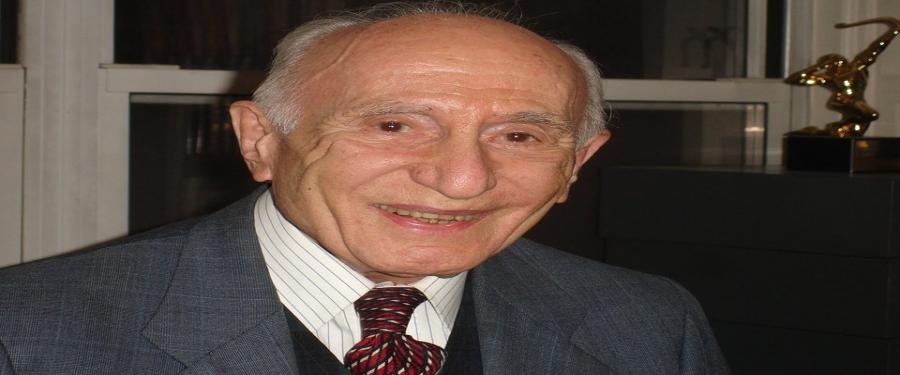
Dr. Ehsan Yarshater (b. 3 April 1920 in Hamadan, Iran and died 1 September 2018 in California, USA), the founder and editor-in-chief of the Encyclopedia Iranica, passed away. Yarshater originally hailed from a Jewish Baha’i family, part of a group of Jewish converts from that city who during the late 19th century CE and early 20th became the biggest group of non-Muslim converts to the creed.

Ehsan Yarshater in the Baha’i community was among the most eminent victims of the Baha’i leadership of the last century. During the 1930s the Third Baha’i Leader, Shoghi Effendi Rabbani (d. 1957) had forbidden any Iranian Baha’i from traveling to the West, on the pain of excommunication. The reasons for Shoghi Effendi’s prohibition on Iranian Baha’is specifically remain somewhat unclear but many middle-class Baha’is of the intellectual class fell to Shoghi Effendi’s authoritarianism during this time.

In the 1930s under the Reza Shah regime, Ehsan Yarshater won himself an Iranian government-sponsored scholarship for graduate studies overseas. He used this scholarship, first alighting in Germany. But the Nazi regime (even though he was officially a Baha’i at the time, Yarshater’s Jewish Iranian pedigree) forced him out and soon to Britain, where he enrolled in the graduate program at SOAS (The School of Oriental and African Studies) studying under German orientalist Walter Bruno Henning.

When Shoghi Effendi found out that Ehsan Yarshater had defied his orders to stay in Iran and had gone to the West, he swiftly issued an excommunication against Yarshater that effectively made him what in Baha’i parlance is designated as a “Covenant Breaker” (a heretic which in Baha’i terminology is considered to be “spiritual leprosy” whereby all must shun such a person). Since his entire family were Baha’is at the time, under Baha’i beliefs (and Shoghi Effendi’s authoritarianism specifically), the entire family of Ehsan Yarshater was obliged to shun him on the pain of being shunned and excommunicated themselves. Yarshater told me in person in his NY office in 1998 that following his excommunication by Shoghi Effendi, he was prevented from visiting his family for decades and was prohibited from even attending his parent’s funeral. He was ostracized by his extended Baha’i family henceforth and the Baha’is in general for decades afterward.

Be that as it may, Ehsan Yarshater had his revenge against the Baha’i cult machinery (and Shoghi Effendi specifically) since during the years of the second Pahlavi King, after Iraj Afshar (d. 2011), he emerged as one of the most eminent experts on Iran of his generation. Under the premiership of Amir Abbas Hoveyda (d.1979), (during the 1960s) the Iranian government of the time commissioned the Encyclopedia Iranica with Ehsan Yarshater as its editor-in-chief: a project and monument that would bear his name forever.


Biography of Ehsan Yarshater in the Bahá’í Community

Dr. Ehsan Yarshater, professor, writer, researcher, translator, Iranologist, and linguist, was born on April 1, 1920, in Hamedan, into a Kashani Bahá’í family. His father, Hashem Yarshater, and his mother, Rouhaniyeh Misaghieh, were both Jewish-Bahá’ís from Kashan, known for their devotion and favored by ‘Abdu’l-Bahá, the leader of the Baha’i Faith. However, in his youth, Ehsan, unlike his parents, showed no zeal for Baha’ism and even refrained from identifying himself as a Baha’i. For this reason, his words and actions were constantly monitored, criticized, and opposed by Baha’i institutions. Ultimately, due to his incompatibility with Baha’i teachings, he and his wife were expelled and ostracized from the Baha’i community. This marked the beginning of the complex relationship of Ehsan Yarshater in the Baha’i community.

He was sent to the Baha’i school Ta’yid in Hamedan, where he studied for four years and was introduced to Baha’i teachings from the outset. Later, when his father moved to Kermanshah for work and Baha’i missionary activities, Ehsan was enrolled for two years at the Jewish Alliance school to keep him away from Islamic teachings. Afterwards, his uncle Abdolmisagh Misaghieh placed him in the Baha’i Tarbiat School in Tehran, which was entirely run according to Baha’i culture and education.

To preserve Baha’i children from outside cultural influences, Baha’i institutions organized weekly Friday ethics classes. These sessions, usually attended by 10 to 15 Baha’i boys and girls, were led by a Baha’i teacher who taught moral lessons from designated textbooks, aiming to strengthen their Baha’i identity and shield them from doubts and societal challenges. Yarshater himself attended these classes and acknowledged that they had a formative impact on his Baha’i upbringing.

Yarshater completed part of his elementary education at the Baha’i school Ta’yid in Hamedan, and after his family moved to Tehran, he was enrolled in Tarbiat School, another Bahá’í institution. While studying in the seventh grade, he lost both of his parents. For two years, his uncle Abdolmisagh Misaghieh, a Jewish-Bahá’í in Tehran, took charge of his guardianship. Abdolmisagh and his wife, however, failed to provide proper care, and their discriminatory and harsh treatment left Yarshater deeply depressed. He attempted suicide several times, but was prevented by others. At the age of fifteen, he fled the Misaghieh household and sought refuge with his brother Esma’il, despite having no financial support.

Through perseverance, Yarshater managed to finish high school at the Preliminary Teachers’ College and ranked first in the entrance exams for Persian Literature at the University of Tehran, earning a scholarship. He received his bachelor’s degree in 1942 and defended his doctoral dissertation in 1947. That same year, he was appointed assistant professor at the Faculty of Theology, University of Tehran. He also received a one-year scholarship from the British Council to study education in England.

After returning to Iran and resuming his teaching at the University of Tehran, Yarshater engaged in cultural and social activities. In 1954, he co-founded the Book Translation and Publishing Institute with Seyyed Hassan Taqizadeh and Edward Joseph. This institute, through its translations of Western literature into Persian, played a significant role—often criticized as negative—in spreading Western culture in Iran. Later, in 1975, the compilation of the Encyclopaedia Iranica and Islam was entrusted to this institute, funded by the national Planning and Budget Organization.


Journey to America and the Establishment of the Encyclopedia Ironic Institute

In the spring of 1958, the Central Council of the University of Tehran approved Yarshater’s appointment to Columbia University in the United States, where he was to teach Persian language, culture, and literature for one year. He remained there for two years as a visiting professor before returning to Iran in 1961 to continue teaching at the University of Tehran. Only a few months after his return, Columbia University invited him back for a permanent position, offering him an independent chair in Persian language and literature. Yarshater accepted and resumed teaching Iranian history and Persian literature in America.

After nearly three years at Columbia, Yarshater conceived the idea of compiling a specialized encyclopedia on Iran, which would later become the Encyclopedia Iranica. To finance this ambitious project, he sought new funding sources. He auctioned his collection of historical artifacts and antiquities in London for $3 million, dedicating the proceeds to the continuation of Iranica. In addition, he established the Persian Heritage Foundation with an endowment of $12 million to serve as the financial backbone of the project.

The Encyclopedia Iranica became one of Yarshater’s most distinguished achievements, to which he devoted nearly his entire life. More than 1,600 scholars and 40 editors from around the world contributed entries across diverse fields—scientific, political, social, historical, artistic, and beyond. This monumental work reflects not only his scholarly dedication but also the broader intellectual independence of Ehsan Yarshater in the Baha’i community, where his stance often diverged from institutional expectations.


Ehsan Yarshater in the Baha’i Community

Since severing emotional, family, and professional ties was not easily possible in the short term, many others were also expelled simply for maintaining open or even secret contact with relatives of those already ostracized. Even greeting or speaking with them was declared forbidden and punishable by expulsion.

Among those affected was Latifeh Alavieh, the wife of Yarshater, who traveled to the United States despite Shoghi Effendi’s prohibition and was consequently subjected to spiritual expulsion and removal from the Bahá’í community. Ehsan Yarshater in the Baha’i community—himself already administratively expelled—was expected to separate from his ostracized wife and cut off all communication with her. Yet, due to his deep affection for her, Yarshater ignored the directive of the Baha’i assembly and remained with his wife, living together until the end of his life.


Travel to America Without Permission from the Bahá’í Administration

After the rise of Shoghi Effendi, the third leader of the Baha’i Faith, strong opposition emerged from those who did not accept him as the successor of ‘Abdu’l-Bahá. Several of these opponents, well-known Iranians residing in the United States, contacted newly arrived Iranian Baha’is and, by presenting documents, persuaded them to change their views of Shoghi Effendi and join the ranks of the dissenters. To protect Baha’is from such doubts, Shoghi Effendi prohibited travel to America and threatened violators with expulsion from the Baha’i community.

As a result of this directive, which remained valid for a long period, many Baha’is who needed to travel for education, business, tourism, medical treatment, or to visit friends and relatives were expelled from the Baha’i community for disobeying the Guardian. According to the rules of expulsion, they were forbidden from any conversation, contact, or meetings with their spouses, children, parents, partners, colleagues, and other Baha’is.


Denial of Baha’i Belief and Refusal to Affirm Faith in Baha’ism

In 1948, Ehsan Yarshater traveled to England for medical treatment under the sponsorship of the Iran–Britain Cultural Association. During his employment with the Ministry of Education, he had declared “Islam” as his religion on the official hiring questionnaire. When the Baha’i administration discovered this, Yarshater was administratively expelled. He was threatened that unless he formally retracted his claim of being Muslim, his expulsion would be publicly announced to the Baha’i community. Consequently, the National Spiritual Assembly of the Baha’is of Iran wrote to the National Assembly of the Baha’is of Britain, requesting that Yarshater be summoned and compelled to send a written statement to the Ministry of Education, explicitly affirming his Baha’i identity and asking that the questionnaire be corrected to replace “Islam” with “Baha’i.” A copy of this letter was to be submitted to the Baha’i Assembly in Britain, which would then forward it to the Iranian Assembly so that his administrative expulsion could be lifted.


Association with Critics and Opponents of Baha’ism

In 1956, the “Philosophy and Humanities Association,” affiliated with UNESCO, invited Yarshater to collaborate. He was tasked with organizing meetings and serving as secretary. The sessions were attended by:

-Jalal Homayi

-Badiozzaman Forouzanfar

-Mohammad Mirfakhra’i

-Va’ezzadeh Khorasani

– Seyyed Hassan Taqizadeh (Chairman)

-Saeed Nafisi

– Fazlollah Sobhi Mohtadi

– Professor Sedighi

-Ehsan Yarshater (Secretary)

The resolutions of the meetings were issued under Yarshater’s signature. Most members were Muslim and naturally had no sympathy for Baha’ism. The topics of discussion were unrelated to the Baha’i Faith. Among the participants was Fazlollah Sobhi Mohtadi, a staunch opponent of Baha’ism. Once a close confidant and personal secretary of ‘Abdu’l-Bahá, Sobhi had been highly esteemed by him. However, after ‘Abdu’l-Bahá’s death and Shoghi Effendi’s succession, Sobhi—who had known Shoghi personally and considered him unfit to lead the Baha’i community—openly opposed him. Shoghi declared Sobhi an enemy of the Faith, expelled him, and forbade Baha’is from any contact with him.

The case of Ehsan Yarshater in the Baha’i Community illustrates how, when Bahá’í informants (the so-called “Protection Committee”) learned of his participation in the same session as Sobhi, they reported it to the Baha’i Assembly and began building a case against him.

Yarshater explained to the National Baha’i Assembly, through mutual acquaintances, that the Philosophy and Humanities Association was an international scholarly body with branches in all civilized nations, and that the participants had been chosen without his involvement. He emphasized that he had neither spoken to nor interacted with Sobhi during the sessions, deliberately avoiding any greeting or conversation. Furthermore, Sobhi’s selection as a member had occurred while Yarshater was in Europe, leaving him no role in the matter.

Nevertheless, the Baha’i Assembly rejected his explanation and resolved that he should be warned of the grave consequences of associating with those spiritually expelled, and pressured to withdraw from further participation in the Philosophy and Humanities Association.

This episode illustrates the complex position of Ehsan Yarshater in the Baha’i community, where his intellectual independence and professional commitments often clashed with the rigid expectations of Bahá’í institutions.


Close Relationship Between Yarshater and Seyyed Hassan Taqizadeh

During his travels in Europe and America, ‘Abdu’l-Bahá met Seyyed Hassan Taqizadeh—one of the leaders of Iran’s Constitutional Revolution, a prominent statesman, and a cultural figure of his time—in Paris. ‘Abdu’l-Bahá hosted Taqizadeh warmly in his home and spent considerable time in conversation with him, yet overall, he was not pleased with the encounter. In one of his tablets, ‘Abdu’l-Bahá described Taqizadeh as an agent of the Azalis and a supporter of Mirza Yahya Subh-i-Azal, considered an enemy of the Baha’i Faith.

Taqizadeh himself later wrote: “After two meetings with ‘Abdu’l-Bahá, although both of us were in London in 1912 and early 1913, no further meeting took place. Later I heard that ‘Abdu’l-Bahá had learned of my friendship with Professor Edward Browne and had become displeased with me because of this connection.” This statement clearly reflects the hostility of the Baha’i leadership toward Taqizadeh.

Unaware of this background, Yarshater considered himself indebted to Taqizadeh and frequently referred to him as a great man, honest, intellectual, patriotic, freedom-loving, and an exceptional scholar devoted to Iran’s interests—calling him “the living history of Iran” and similar titles. Yarshater attributed much of his own success to Taqizadeh, describing him as both a friend and mentor: “Someone who insisted on being by my side during assignments.” In addition, Yarshater published an article in Iran-e Ma Newspaper on Friday, May 14, 1954, praising Taqizadeh on the front page with admiration and respect.

These tributes, however, caused difficulties for Yarshater, since he was honoring someone regarded as an enemy of the Baha’i Faith and a figure with whom ‘Abdu’l-Bahá himself had been at odds. When confronted by the Baha’i Assembly, Yarshater defended himself cautiously, stating:

“I was completely unaware of Taqizadeh’s background in relation to the Baha’i Cause and never imagined that he had any enmity toward it. Because he had assisted me administratively, I felt indebted to him, and to repay that debt I published the article in Iran-e Ma. My relationship with Taqizadeh is purely scholarly, and I have never observed him making any remarks against the Bahá’í Faith.”

Nevertheless, the Bahá’í Assembly issued formal reminders, conveying ‘Abdu’l-Bahá’s statements about Taqizadeh and reiterating his hostility toward the Faith. Despite these warnings and accusations, reports indicate that Yarshater once again traveled with Taqizadeh on a subsequent mission.

This episode highlights the tension surrounding Ehsan Yarshater in the Baha’i community, where his intellectual respect for cultural and political figures often conflicted with the rigid boundaries imposed by Baha’i institutions.


Travel to Israel Without Permission

One of the most controversial and forbidden actions attributed to Yarshater was his journey to Israel in May 1978. In an effort to improve its image among Iranian intellectuals and elites, the Israeli government invited a number of writers and students to visit. Ehsan Yarshater was nominated by Columbia University to join the “Jerusalem Committee,” which convened every three years in Israel to discuss cultural and social issues related to Jerusalem.

This unauthorized trip did not escape the attention of the National Spiritual Assembly of the Baha’is, which had long monitored Yarshater’s activities. According to Baha’i regulations, Yarshater was required to obtain permission from the National Assembly of the Baha’is of America and from the Universal House of Justice before traveling to Israel, since even pilgrimage to Baha’i holy sites was forbidden without such authorization. Instead of seeking approval from Baha’i institutions, Yarshater obtained permission directly from Mohammad Reza Pahlavi and, with his endorsement, participated in the committee’s sessions.

On March 19, 1980, while residing in the United States, Yarshater formally requested through a letter to the Baha’i Assembly of Iran that his name be removed from the list of Baha’is, thereby renouncing his affiliation with the faith. To ensure that his resignation reached the Iranian Assembly, he also sent copies of his letter to two leading Bahá’ís in Iran—General ‘Ala’i and Ali-Mohammad Varga—asking them to deliver it to the National Assembly so that the Bahá’í administration would cease interfering in his life.

This letter, effectively a declaration of disassociation from the Bahá’í Faith, was Yarshater’s final step. By resigning, he no longer considered himself Bahá’í, was no longer bound by the directives of Bahá’í institutions, and no longer feared future spiritual expulsion. However, it appears that his resignation never reached the Bahá’í Assembly in Iran, as General ‘Ala’i and Ali-Mohammad Varga delayed in forwarding the document. Consequently, the Bahá’í administration continued to regard him as a rebellious Bahá’í who needed to reform his conduct.

This episode underscores the fraught position of Ehsan Yarshater in the Bahá’í community, where his independence and refusal to submit to institutional authority ultimately led to his formal break with the faith.


Pressures on Ehsan Yarshater in the Bahá’í Community

For the National Spiritual Assemblies of the Baha’is in Iran, England, and the United States, Yarshater’s conduct was deemed unacceptable. He had openly declared: “I cannot commit myself to carrying out and implementing the laws of the Baha’i Faith.” In practice, he acted contrary to Baha’i directives and showed little regard for its institutions or leaders.

Ordinarily, the simplest course of action for the Bahá’í Assembly in Iran would have been to expel him formally and announce his spiritual excommunication in the Bahá’í News, as they had done without hesitation for hundreds of ordinary Bahá’ís—prohibiting others from greeting or speaking with them and rendering their lives dark and unbearable. But Yarshater was not someone they could easily threaten with public expulsion. Doing so would have placed the Bahá’í administration itself under scrutiny. Expelling a renowned figure admired by intellectuals in Iran, Britain, America, and beyond was no simple matter. With his numerous publications, global reputation, and wide circle of admirers, the consequences of expelling him could have been damaging for the Bahá’í institutions.

Thus, the Assembly decided instead to exert pressure through close friends and immediate relatives, monitoring his activities, collecting reliable reports on his views, and urging him to abandon his opposition to Baha’ism.

Those tasked with contacting him included Dr. Shapur Rassekh and his wife Mehri Rassekh, Nouraddin Momtazi, Dr. Ali Rassekh, General ‘Ala’i, Dr. Houshyar, Ali-Mohammad Varga, his sister Nouraniyeh Yarshater and her husband Rouhollah Motavajjeh, along with others—some of whom were key members of the Bahá’í “Protection Committee.” Familiar with Yarshater’s temperament and aware of his scholarly and social standing, they were reluctant to submit reports that might anger the Assembly and lead to his spiritual expulsion. Instead, they spoke of him favorably, insisting that Yarshater was not opposed to Bahá’í institutions and should be given an opportunity to correct his mistakes.

Shapur Rassekh and his wife even requested that the Iranian Assembly grant him another chance and consider a “supplementary period” for him.

Dr. Houshyar, noting Yarshater’s illness and his planned trip to England for convalescence, suggested leaving him undisturbed until his health improved, after which stronger measures could be taken. Momtazi also defended him, saying: “He believes in the Bahá’í administration, and although he attended a session with Sobhi, who was expelled, he never exchanged greetings or words with him.” Momtazi further conveyed Yarshater’s assurance that if the Assembly opposed his continued participation in the Philosophy and Humanities Association, he would resign from it.

General ‘Ala’i and Varga, who were supposed to deliver copies of Yarshater’s resignation letter to the Assembly, delayed forwarding it out of fear that it might cause him further trouble. The letter was eventually sent to the National Assembly nearly ten years later, on July 7, 1989. With the arrival of this resignation, some of the pressure on Yarshater was lifted, for he was no longer considered Bahá’í and thus no longer bound to obey the directives of the Assembly.

This episode illustrates the persistent tensions surrounding Ehsan Yarshater in the Bahá’í community, where his intellectual independence and refusal to submit to institutional authority forced the Bahá’í administration to adopt indirect methods of pressure rather than risk the consequences of a public expulsion.


Change of Tactics by the National Baha’i Assembly Toward Ehsan Yarshater

From September 3 to 6, 2015, the National Spiritual Assembly of the Baha’is of the United States held, as it had for the past 24 years, the annual conference of the Association of Friends of Iranian Culture in Chicago. That year’s conference marked both the 30th anniversary of the Universal House of Justice’s “Peace Message” to world leaders and the 25th anniversary of the founding of the Association. In addition to a large number of Iranian Baha’is residing in America, prominent Bahá’í and non-Bahá’í figures were invited. Among those present was Ehsan Yarshater, who attended despite his advanced age. His participation—given his prior administrative and spiritual expulsion—was contrary to Bahá’í texts and considered highly unexpected, later provoking objections from some Iranian Bahá’ís living in the United States.

It may be inferred that, since years of pressure and threats had failed to achieve results and Yarshater had already renounced the Bahá’í Faith, the Iranian organizers of the Association, in consultation with the U.S. National Assembly and the Universal House of Justice, deemed continued harsh treatment unwise. Considering his age, scholarly stature, and positive reputation worldwide, they sought to close the file on his expulsion. Rather than presenting him as a non-Bahá’í opposed to Bahá’í teachings and institutions, they set aside the explicit and binding texts of the Faith and portrayed him as a loyal Bahá’í devoted to the administration, aiming to draw his image back into the Bahá’í community.

Using his friendship with the family of Shapur Rassekh—who was the keynote speaker at that year’s conference—they invited Yarshater and, before an audience of nearly 2,500 Bahá’ís, effectively reintroduced him. Because Yarshater had long been absent from Bahá’í institutions, lived abroad, rarely attended Bahá’í gatherings, and his expulsion had never been formally announced in Bahá’í publications, many Bahá’ís were unaware of his history. Thus, this historical distortion was carried out successfully. Such tactics, however, have a long precedent within Baha’i practice.

This episode highlights the shifting strategies toward Ehsan Yarshater in the Bahá’í community, where institutional rigidity gave way to pragmatic accommodation in light of his global stature.


Exploitation and Manipulation of Ehsan Yarshater’s Death by the Bahá’í Administration

Ehsan Yarshater passed away on September 1, 2018, at the age of 98 in Fresno, California. Immediately afterward, the National Spiritual Assembly of the Bahá’ís of the United States organized memorial programs, inviting American Bahá’ís as well as Iranian and American scholars and friends. Without the presence of any of Yarshater’s family members, they staged ceremonial acts such as the recitation of Baha’i funeral prayers and supplications in both Persian and English, and invited respected figures such as Abbas Amanat to read the Assembly’s official message on the occasion of his passing.

Part of the message read:

“The works of Dr. Yarshater reflect his profound love for Iran’s past and his faith in its future—both inspired by his belief in Bahá’í teachings and by ‘Abdu’l-Bahá’s promises regarding the extraordinary destiny of that land… For the eternal exaltation of his soul, now united with the immortal spirit of his late wife, Latifeh, we shall pray beneath the dome of the Bahá’í House of Worship.”

Abbas Amanat shared touching stories from Yarshater’s life, including his deep affection for his mother, whom he lost during adolescence. Interestingly, a condolence message from Dr. Shapur Rassekh—an old friend of Yarshater who had once tried to persuade him to return to the Bahá’í Faith—was also read aloud.

Through this carefully crafted strategy, the Bahá’í administration in America sought to portray Yarshater and his wife as faithful Bahá’ís loyal to the institutions. By inviting him to the annual conference of the Association of Friends of Iranian Culture and claiming his Bahá’í identity, they effectively appropriated his reputation and prestige for the benefit of the Faith. Moreover, by asserting his Bahá’í affiliation, they positioned themselves to claim both the moral and financial legacy of Encyclopaedia Iranica, the lifelong work of Yarshater. Since Yarshater left no children and had willed all his assets to the Iranica Foundation, this maneuver was particularly significant.

This episode reveals the posthumous manipulation of Ehsan Yarshater in the Bahá’í community, where his scholarly legacy was reframed to serve institutional interests.


Conclusion

Ehsan Yarshater, professor, researcher, writer, translator, Iranologist, and linguist, departed this world while facing two major accusations. The first was his association with the Pahlavi regime and his close ties with its political and cultural figures; the second was his alleged affiliation with the Bahá’í Faith and the accusation of being Bahá’í. After nearly seventy years of cultural work and efforts to introduce Iran to the world, Yarshater passed away at the age of ninety-eight. Having no children and with no close relatives present, he was buried in a cemetery in the United States according to Bahá’í custom—despite the fact that he was a Muslim by declaration, had little sympathy for the Bahá’í Faith and its institutions, and that both he and his wife had been expelled by the National Spiritual Assembly of the Bahá’ís of Iran.

Yarshater maintained friendships and connections with certain figures of the Pahlavi regime, yet it seems unlikely that he betrayed his country. Still, questions remain: Might we have misjudged him? Could our hasty actions have inadvertently placed him in the embrace of the Bahá’ís? Was our assessment of him fair? And is there any clear evidence of treason on his part?

In any case, he was not a devout Muslim but rather a secular scholar—a man whose life and legacy reflect the complex position of Ehsan Yarshater in the Bahá’í community, caught between accusations, cultural achievements, and the politics of identity.


Some Frequently Question about Ehsan Yarshater in the Baha’i community:

1- Why did Shoghi Effendi not want Iranian Baha’is to travel to the West, and what was the reason for Ehsan Yarshater’s excommunication?

It seems that Shoghi Effendi’s motivation in prohibiting Iranian Bahá’ís from traveling to the West was less about missionary considerations and more rooted in personal and political concerns. He was engaged in an open conflict with Ahmad Sohrab and the Caravan/New History Society, and feared that the presence of Iranian Bahá’ís in the West might spark new confrontations and undermine his position. Moreover, the stark contrast between the cultural image of the Bahá’í Faith in Iran and in the West likely led him to prevent the mingling of these two communities; educated and eloquent Iranians could, like Sohrab, challenge his authority. For this reason, he imposed the ban accompanied by the threat of excommunication, which in the case of Ehsan Yarshater was enforced within the Bahá’í community—an indication of his rigid and authoritarian approach.

2- Why did Shoghi Effendi restrict the translation of the Kitáb-i-Aqdas, and what consequences did this directive have?

A recurring theme in the history of Bahá’í leadership and administration is what can aptly be described as information control. A large portion of the traditional and steadfast Bahá’ís resided in Iran, and the leadership sought to isolate them from broader contact with the outside world. The concern was that if these believers encountered individuals who had personally met ‘Abdu’l-Bahá or Bahá’u’lláh and were familiar with the controversies surrounding them, they might abandon the faith altogether.

In this context, Shoghi Effendi issued a formal directive—still considered valid—that prohibited the translation of Bahá’u’lláh’s Arabic writings into Persian. As a result, even the Kitáb-i-Aqdas remains inaccessible in the native language of Iranian Bahá’ís. This ruling formed part of a broader set of Bahá’í translation regulations that imposed strict boundaries on the transmission of sacred texts:

  • Arabic works may not be translated into Persian.
  • Persian works may not be translated into Arabic.
  • Persian and Arabic works may only be translated into “Eastern languages” such as Turkish and Urdu.
  • Persian and Arabic works may be translated into English.
  • Persian and Arabic works may not be translated into non-English European languages.
  • English works may be translated into non-English European languages.

This policy evokes parallels with the Roman Catholic Church’s insistence, for centuries, that the Bible remain solely in Latin. Efforts to render it into vernacular languages were met with persecution and suppression—a practice ultimately overturned by the Protestant Reformation.

2 Comments
  1. Susan says

    I have to thank you for the efforts you have put in writing this website.
    I really hope to check out the same high-grade blog posts from
    you in the future as well. In truth, your creative writing abilities has motivated me to publish your posts. 😉

  2. I really like reading through a post that will make people think.
    Also, thank you for permitting me to comment!

Leave A Reply

Your email address will not be published.